
AI data center optics are moving into a new phase in 2026. The industry is no longer discussing 800G as the end point: 1.6T pluggable optics are moving closer to broader deployment, while 3.2T architectures, 400G-per-lane links, co-packaged optics (CPO) and near-packaged optics (NPO) are becoming major topics across the optical ecosystem.
That shift matters far beyond hyperscale data centers. Distributors, system integrators and enterprise buyers need to understand how the roadmap from 800G to 1.6T and 3.2T will affect transceiver formats, fiber infrastructure, power budgets, thermal design and sourcing decisions.
Key Takeaways
Why AI Data Center Optics Are a Major 2026 Trend
AI clusters move enormous volumes of data between GPUs, accelerators, switches, storage and memory. As cluster sizes grow, network bandwidth must scale without allowing power consumption and thermal density to grow at the same rate.
At ECOC 2026, Marvell highlighted 2nm optical technologies including 400G-per-lane PAM4 demonstrations, 800G ZR/ZR+ pluggables and 1.6T ZR/coherent-lite technologies. Coherent also demonstrated a 3.2T 2×DR4 transceiver architecture in an OSFP-size package using eight 425G PAM4 optical lanes. These are important signals that the industry roadmap is moving beyond 800G toward denser optical links.
For buyers, the key point is simple: bandwidth density and power per bit are becoming as important as headline speed.
800G vs 1.6T vs 3.2T Optics
| Generation | Typical Technical Direction | Primary Role | 2026 Market Position |
|---|---|---|---|
| 800G | 100G/lane or 200G/lane architectures depending on implementation | High-speed AI scale-out and data center interconnect | Commercially established and expanding |
| 1.6T | Commonly associated with 200G/lane electrical/optical architectures; coherent 1.6T also emerging | Next-generation AI fabrics and high-density switching | Transitioning from early deployment toward broader adoption |
| 3.2T | 400G-per-lane optical development and highly integrated architectures | Future ultra-high-density AI fabrics | Emerging; active demonstrations and development |
Representative Real-World Products and Technologies
| Generation | Brand | Representative Model / Technology | Status | Typical Role |
|---|---|---|---|---|
| 800G | Cisco | OSFP-800G-DR8 | Commercial product | 800GBASE-DR8, OSFP, parallel SMF, up to 500 m |
| 1.6T | Coherent | FTCF2519E3PCA 1.6T-DR8 OSFP | Commercial product | 1.6T DR8, dual MPO-12, parallel SMF, up to 500 m |
| 1.6T | Lumentum | 1.6T 2×DR4 OSFP Transceiver Module | Commercial product | 1.6 Tb/s, dual MPO-16/APC, SMF, up to 500 m |
| 3.2T | Coherent | 3.2T 2×DR4 OSFP-size architecture | Technology demonstration — no production SKU published | Eight 425G PAM4 optical lanes; future 400G/lane connectivity |
800G: The Current High-Speed Foundation
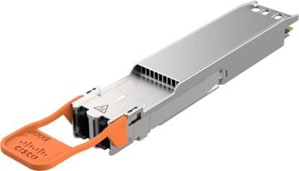
800G optics provide a practical foundation for many current AI and cloud networking upgrades. Depending on the application, 800G can support short-reach multimode or single-mode links, high-density intra-data-center connections, and coherent DCI applications such as ZR/ZR+.
The important sourcing questions are no longer only “What speed?” and “What distance?” Buyers also need to confirm:
- Form factor such as OSFP or QSFP-DD
- Host electrical interface and lane rate
- Single-mode or multimode fiber
- Connector type, including LC or MPO/MTP
- Reach requirement
- Power class and thermal environment
- FEC and CMIS requirements
- Switch or platform compatibility
The same discipline applies at lower speeds. If your project is still built around 1G, 10G, 25G or 40G interfaces, our SFP compatibility guide explains how module speed, uplink configuration and fiber type must be matched before procurement.
1.6T: The Next Major Step for AI Fabrics
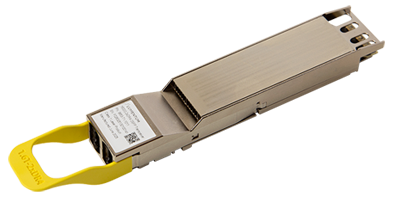
1.6T optics are one of the most important transition points in the current roadmap because they double the aggregate bandwidth of an 800G module while pushing the industry toward higher per-lane speeds and denser switch faceplates.
In 2026, the 1.6T ecosystem includes short-reach and data-center pluggables as well as coherent 1.6T concepts for longer data center interconnect applications. Marvell announced a 1.6T ZR/ZR+ pluggable platform earlier in 2026, while multiple vendors have demonstrated 1.6T modules and related DSP, silicon photonics, InP and VCSEL technologies.
For procurement teams, 1.6T should be treated as a system-level decision rather than a module-only upgrade. The switch ASIC, electrical interface, connector system, fiber plant, cooling and software management all need to support the same architecture.
3.2T: What Is Real Today?
3.2T is attracting attention because it represents the next doubling after 1.6T, but buyers should distinguish between technology demonstrations and broadly available production deployments.
At ECOC 2026, Coherent described a 3.2T 2×DR4 demonstration in an OSFP-size package with eight 425G PAM4 optical lanes. Marvell separately highlighted 400G-per-lane optical PAM4 technology aimed at enabling the transition toward 3.2T connectivity.
This makes 3.2T highly relevant for roadmap planning, but many mainstream enterprise and regional data center projects will continue to deploy lower-speed generations for years. The practical value of following 3.2T today is understanding where connector density, thermal design and fiber requirements are heading.
Why 400G-per-Lane Technology Matters
Increasing module bandwidth without endlessly increasing the number of lanes requires faster signaling per lane. The move from 100G/lane to 200G/lane and then toward 400G/lane is therefore central to future transceiver density.
Higher lane rates create new engineering challenges:
- Stricter signal integrity requirements
- Higher sensitivity to insertion loss and connector quality
- More demanding DSP and optical component design
- More difficult thermal management
- Greater importance of fiber cleanliness and test discipline
This is why an optical upgrade is rarely only a transceiver purchase. Patch cords, MPO/MTP assemblies, fiber panels, cleaning tools and test equipment become part of the same performance chain.
CPO and NPO: Why Pluggable Optics Are Not the Only Path
Traditional pluggable optics remain attractive because they are standardized, replaceable and easy to service. But as switch capacity rises, moving optical engines closer to the switch ASIC can reduce electrical reach and improve system efficiency.
Co-packaged optics (CPO) place optical engines very close to the switch silicon. Near-packaged optics (NPO) use a related approach while preserving a different balance between integration and serviceability.
ECOC 2026 demonstrations covered both CPO and NPO alongside next-generation pluggables. This is a strong indication that future AI networks may use several optical architectures at the same time depending on reach, density, serviceability and power requirements.
What Buyers Should Check Before Ordering High-Speed Optics
1. Confirm the exact host platform
Do not source by speed alone. Confirm the switch, router, NIC or accelerator platform, port type and supported module form factor.
2. Match fiber type and reach
Verify whether the link is multimode or single-mode and confirm the actual link length, not only the nominal building distance.
3. Verify connector architecture
LC duplex and MPO/MTP systems have different polarity, cleaning and patching requirements. High-density parallel optics can fail even when the transceiver itself is correct if the cabling system is mismatched.
4. Check power and cooling
High-speed modules can impose significant thermal loads. Confirm the port power class, airflow direction and operating environment before deployment.
5. Confirm management and compatibility
CMIS revisions, DOM/DDM functions, firmware expectations and vendor coding can affect interoperability. Compatible optics should be validated against the target equipment before large-volume rollout.
6. Test the complete channel
For critical deployments, validate transceivers together with patch cords, trunks, panels and adapters. End-to-end optical loss, cleanliness and polarity matter as link speeds increase.
How the 2026 Roadmap Affects Distributors and Integrators
Most distributors do not need to replace their existing 10G, 25G, 40G or 100G portfolio simply because 1.6T and 3.2T are attracting attention. Instead, the roadmap suggests three practical actions:
- Maintain current-speed availability for enterprise and telecom projects that still deploy proven interfaces.
- Add higher-speed sourcing capability so 400G, 800G and 1.6T requests can be handled without rebuilding the supply chain from zero.
- Strengthen fiber infrastructure supply, especially MPO/MTP assemblies, high-density patching, single-mode links, cleaning and testing accessories.
QGreenLink supports project-based sourcing for optical transceivers, fiber patch cords and related network connectivity products. For current deployments, you can also review our 40GBASE-LR4 QSFP+ module and 40G SR4 MPO optical transceiver listings as examples of how form factor, reach and fiber interface must be specified together.
Frequently Asked Questions
Is 1.6T replacing 800G immediately?
No. 800G and 1.6T will coexist. Adoption depends on switch platforms, network architecture, cost, power and the required bandwidth density.
Is 3.2T commercially mainstream in 2026?
Not yet. 3.2T is an important development and demonstration area in 2026, especially around 400G-per-lane optical technology, but broad production deployment is still emerging.
What is the biggest challenge when moving to higher-speed optics?
There is no single challenge. Signal integrity, power, thermal management, fiber quality, connector cleanliness, software management and interoperability all become more demanding as lane rates increase.
Will CPO replace pluggable transceivers?
Not necessarily. Pluggable optics offer strong serviceability and a mature ecosystem, while CPO can improve power and density in specific high-scale architectures. The market is likely to use multiple approaches.
Key Takeaway
The most important optical networking trend in 2026 is not simply “faster modules.” It is the move toward higher bandwidth density with lower power per bit. 800G is already a major deployment platform, 1.6T is becoming increasingly important, and 3.2T demonstrations show where the next generation of AI networking is heading.
For buyers, the best strategy is to plan the full optical channel: transceiver, connector, fiber, patching, power, cooling and host compatibility.
Need a Compatible Optics Quote?
Send QGreenLink the target switch or NIC, module speed, reach, fiber type and connector. We can help shortlist compatible optical modules and the matching fiber connectivity for project sourcing.